
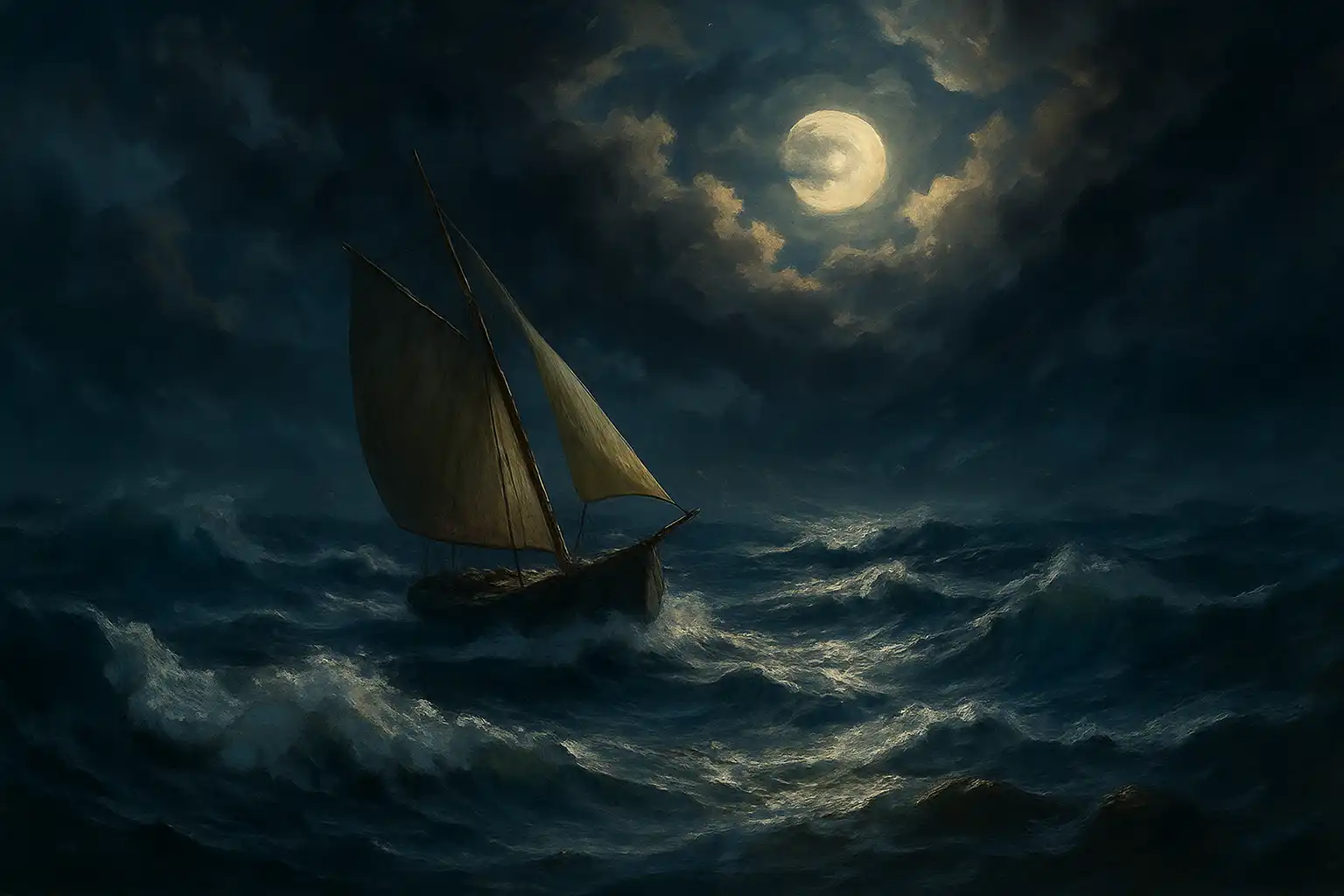
This is Dickinson at her most unguarded. Twelve lines of pure desire, either for a person or God or both, depending on how you read it. “Wild nights! Wild nights!” repeats like someone who can’t contain what they’re feeling. The whole poem is about wanting to be with someone so intensely that everything else becomes irrelevant. No more navigation, no more searching, just arrival and anchoring.
The poem works on at least two levels simultaneously. Read it as erotic and it’s about physical intimacy, mooring in another person’s body. Read it as spiritual and it’s about union with the divine, finding rest in God. Dickinson refuses to separate these readings. The language supports both, blends both, makes them inseparable. That fusion is what makes the poem so striking and so controversial when it first appeared.
What’s unusual for Dickinson is the directness. She’s often oblique, circling her subject, approaching from angles. Not here. “Wild nights should be / Our luxury!” That’s about as straightforward as desire gets. The navigation metaphors add complexity, but the core emotion is unambiguous. She wants to be with this person (or God) and everything else is just noise until that happens.
The poem scandalized early editors. They softened the punctuation, tried to tame it down. Modern readers see what they were worried about. This doesn’t sound like proper 19th-century poetry by a reclusive woman from Amherst. It sounds like passion barely contained by language. That rawness is what makes it one of her most quoted and discussed poems. Dickinson let herself say what she wanted without filtering it through her usual indirection.
Table of Contents:
Full Poem Text
First published in 1891 in Poems by Emily Dickinson, Third Series. This poem is in the public domain in the United States.
Wild nights – Wild nights!
by Emily Dickinson
Wild nights! Wild nights!
Were I with thee,
Wild nights should be
Our luxury!
Futile the winds
To a heart in port,
Done with the compass,
Done with the chart.
Rowing in Eden!
Ah! the sea!
Might I but moor
To-night in thee!
Summary and Meaning
First stanza: “Wild nights! Wild nights!” The repetition emphasizes intensity. One wouldn’t be enough. “Were I with thee” sets the condition. If we were together, then “wild nights should be / Our luxury!” Luxury means abundance, richness. The word suggests both physical pleasure and spiritual fulfillment.
Second stanza shifts to navigation. “Futile the winds / To a heart in port.” If your heart has reached safe harbor, winds don’t matter. You’re anchored. “Done with the compass, / Done with the chart.” Tools for finding your way when lost. Once you’ve arrived, you don’t need them.
Love (or spiritual union) as arrival after searching. No more wandering. The searching is over.
Third stanza: “Rowing in Eden!” Paradise as ocean. You’re rowing through the biblical garden, which makes it both sacred and liquid. “Ah! the sea!” emphasizes that watery element.
“Might I but moor / To-night in thee!” Mooring means anchoring a boat. She wants to moor “in thee,” in the other person or in God. That’s both nautical metaphor and intimate union. To anchor yourself in another is to find rest, safety, completion. “To-night” adds urgency. Not someday. Tonight.
The meaning shifts with your reading. Erotic: physical union, bodies together. Spiritual: soul finding God. Dickinson’s genius is refusing to choose. The language works for both. The passion is the same whether directed at a lover or God. That fusion makes it powerful and unsettling.
Themes and Analysis
Desire as Transcendence
The poem treats desire as something that elevates rather than degrades. “Wild nights” aren’t shameful or dangerous. They’re luxury. The wanting itself is valuable, and fulfillment would be paradise. Whether that’s physical passion or spiritual longing doesn’t matter. The intensity is what counts.
By calling it luxury, Dickinson’s saying this isn’t base or crude. It’s rich, abundant, something to be celebrated. That’s radical for her time and context. Passion, especially for a woman, especially in poetry, was supposed to be either absent or heavily coded. Dickinson just declares it openly.
The Eden reference takes it further. Rowing in paradise suggests that intimacy (physical or spiritual) is a return to perfection, to the state before the fall. That’s huge. Most Christian theology treats physical desire as fallen, corrupted, something to overcome. Dickinson’s placing it in Eden, making it part of paradise rather than exile from paradise.
Navigation and Arrival
Compass and chart are tools for people who are lost. You use them when you don’t know where you’re going. “Done with the compass, / Done with the chart” means done searching. That’s the key theme: love or divine union as the end of seeking. You’ve been lost at sea, and now you’ve reached port. You can rest.
“To a heart in port” is perfect. The heart has arrived, is safe. Once you’ve found what you were looking for, winds become irrelevant. They can’t move you because you’re anchored.
Mooring is what the final stanza is about. You’ve found the place and now you’re tying yourself to it. When that place is another person or God, mooring becomes intimacy. You’re attaching yourself, making yourself part of them, finding rest in them.
Sacred and Secular Fusion
The poem refuses to separate physical passion from spiritual longing. That’s its most radical move. The language works for both readings simultaneously. “Were I with thee” could be a lover or God. “Rowing in Eden” could be sex or spiritual ecstasy. “Moor / To-night in thee” could be physical union or mystical union.
Critics have argued for decades about which reading is correct. The answer is both. Dickinson’s not using spiritual language to disguise erotic content, and she’s not using erotic language to express spiritual yearning. She’s saying they’re the same thing. The passion that draws you toward another person is the same passion that draws you toward God. The desire for intimacy is the desire for completeness, whether you find it in a body or in the divine.
That refusal to separate sacred from secular, spiritual from physical, is what made early editors uncomfortable. It challenges basic assumptions about how these categories work. But it’s also what makes the poem lasting. Most people experience desire as unified. We don’t split ourselves into pure spirit and base flesh. We’re whole beings wanting connection. Dickinson captures that wholeness.
Urgency and Longing
“To-night in thee!” The urgency is part of the meaning. Not someday. Not when conditions are right. Tonight. Now. The longing has reached the point where waiting becomes unbearable. That’s the emotional peak the whole poem builds toward.
The exclamation points throughout reinforce this. “Wild nights! Wild nights!” at the start. “Ah! the sea!” in the final stanza. These aren’t calm observations. They’re outbursts. The speaker can barely contain what they’re feeling. That barely-contained quality is what gives the poem its power.
Structure and Form
Three stanzas, four lines each. Twelve lines total. Brief even for Dickinson, which concentrates the intensity. No room for elaboration. Just core emotion and key metaphors.
Rhyme scheme is ABCB in each stanza. Thee/luxury, port/chart, sea/thee. Simple rhymes that don’t distract from content.
Meter is loose iambic, but not strict. “Wild nights! Wild nights!” breaks regular meter with emphatic repetition. That’s intentional. Form matches feeling. Passion doesn’t follow neat patterns.
“Done with” in the second stanza creates parallel structure emphasizing finality. Done with the compass. Done with the chart. Two tools discarded, two lines devoted to it. Complete rejection of navigation.
Punctuation is unconventional. Exclamation points everywhere. Dashes separating thoughts. The effect is breathless, urgent. The speaker can’t slow down for periods and commas. That rush matches the emotion.
Final stanza’s structure mirrors meaning. “Rowing in Eden!” is one complete image. “Ah! the sea!” is sudden exclamation. Then “Might I but moor / To-night in thee!” stretches across two lines with enjambment creating suspense before “thee.” That makes the final word land with extra weight.
Historical and Literary Context
Written around 1861, peak Dickinson period. Not published until 1891, five years after her death, in the Third Series edited by Todd and Higginson. Those editors were uncomfortable with the poem’s frankness and altered punctuation to soften it. Modern editions restore her original punctuation and capitalization.
The poem’s boldness shocked early readers. Women weren’t supposed to write about passion, especially not this directly. Even now, knowing Dickinson never married and lived reclusively, readers find this poem startling. Where did this come from? Who was she writing to?
The answer might be that it doesn’t matter. The poem could be addressed to a specific person, a hypothetical lover, God, or even an idealized version of love itself. The ambiguity is part of its power. It’s a cry of desire that transcends its specific object.
Nineteenth-century poetry kept strict boundaries between sacred and secular love. Devotional poetry used chaste language. Romantic poetry was careful, coded, restrained. Dickinson explodes those boundaries. Her navigation metaphors could come from hymns or from secular love poetry, and she uses them for both purposes at once.
The poem influenced how later readers understood Dickinson. She wasn’t just the death poet, the nature poet, the recluse writing about flies buzzing. She was also someone who felt and expressed intense passion, whether for a person or for God or for the idea of union itself. That fuller picture of her emotional range changed her reputation.
Significance and Impact
It’s one of her most quoted poems, partly because it’s shocking coming from Dickinson. The directness of the passion feels almost un-Dickinsonian until you remember she’s the one who wrote it. That surprise factor keeps it memorable.
The fusion of sacred and secular desire influenced religious poetry and love poetry after it. You can’t read this and still think those categories are completely separate. Dickinson proved they could coexist, even enhance each other, in the same lines.
The poem demonstrates emotional range. Dickinson’s known for restraint, compression, indirection. This is still compressed but it’s not restrained. It’s an outburst. Showing she could do both expanded understanding of what her poetry was capable of.
The navigation metaphors became frequently referenced. “Done with the compass, / Done with the chart” as an expression of arrival, of finding what you’ve been seeking. That image of mooring as intimacy. These metaphors entered the broader conversation about love and fulfillment.
The poem’s also important for what it reveals about desire itself. Dickinson treats it as unified rather than split between body and soul. That wholeness validates how most people actually experience longing. We don’t separate ourselves into pure spirit wanting God and corrupt flesh wanting pleasure. We’re whole beings who want connection, completion, union. The poem honors that wholeness.
Famous Lines and Quotes
“Wild nights! Wild nights! / Were I with thee”
The opening cry. Sets the tone for everything that follows. The repetition makes it feel like the speaker can’t help herself, has to say it twice because once isn’t enough to contain the feeling. “Were I with thee” makes it hypothetical but no less intense.
“Wild nights should be / Our luxury!”
Passion as abundance. Not shameful, not hidden, but celebrated as richness. “Luxury” elevates desire instead of degrading it. That word choice was bold for Dickinson’s era and context.
“Done with the compass, / Done with the chart”
The rejection of navigation tools. Once you’ve found what you’re searching for, you don’t need guidance anymore. You’re home. The parallel structure (“Done with”) emphasizes finality. That searching is over.
“Rowing in Eden! / Ah! the sea!”
Paradise as ocean. Eden with waves. The combination is strange and perfect. “Ah! the sea!” sounds like sudden wonder or realization. You’re in paradise but it’s liquid, fluid, something you move through rather than stand on.
“Might I but moor / To-night in thee!”
The closing wish. Mooring as intimacy, anchoring yourself in another person (or in God). “To-night” adds urgency. Not eventually, not someday. Tonight. Now. The exclamation point makes it a cry, not just a wish. That’s the emotional peak the whole poem aims toward.
Conclusion
Wild nights – Wild nights! is Dickinson letting herself express desire without the filters she usually applies. Twelve lines of wanting to be with someone (or something, if you read it spiritually) so intensely that everything else becomes irrelevant. The navigation metaphors ground it in something concrete while the Eden reference lifts it toward transcendence. The result is a poem that works as both erotic and spiritual simultaneously.
What makes it last is that refusal to separate physical from sacred. Most poetry picks one or the other. Dickinson says they’re the same passion, the same longing, the same desire for union and completion. Whether you’re mooring in a lover or in God doesn’t change the fundamental experience. You’re trying to end the restless searching, trying to find the port where your heart can rest.
The poem scandalized early editors because it was too direct, too passionate, too willing to blur boundaries that were supposed to stay clear. Modern readers see that boldness as exactly why it works. Dickinson captured something true about desire by refusing to tame it or separate it into acceptable categories. She just let it be what it is: wild, urgent, overwhelming, and ultimately about finding rest in union with the other, whoever or whatever that other might be.
Frequently Asked Questions About Wild nights – Wild nights!
What is Wild nights – Wild nights! about?
The poem expresses intense desire for union with another person, God, or both. The speaker imagines being with someone as “wild nights” that would be their “luxury.” Navigation metaphors (compass, chart, mooring) suggest finding safe harbor after long searching. The final image of mooring in Eden fuses physical intimacy with spiritual fulfillment. The ambiguity is intentional. Dickinson’s language supports both erotic and sacred readings simultaneously.
Why does Dickinson repeat “Wild nights” at the beginning?
The repetition conveys urgency and intensity. Saying it once wouldn’t be enough to express the overwhelming feeling. The double exclamation with exclamation points makes it feel like an outburst, barely contained emotion. That repetition sets the tone for the whole poem as passionate and direct rather than restrained and careful.
What does “Done with the compass, / Done with the chart” mean?
These are navigation tools sailors use when they’re lost or searching. Being “done with” them means the journey is over. You’ve found your destination, your port, so you don’t need guidance anymore. In the poem’s metaphor, this represents love or spiritual union as arrival. The searching ends. The restlessness stops. You’re home.
Is this poem erotic or spiritual?
Both. The language works on both levels simultaneously. “Mooring in thee” could be physical intimacy or mystical union with God. “Rowing in Eden” evokes both paradise and bodies. Dickinson refuses to separate physical passion from spiritual longing, suggesting they’re expressions of the same fundamental desire for connection and completion. That fusion is what makes the poem powerful and what made early editors uncomfortable.
Why was this poem controversial when it was published?
It appeared in 1891, five years after Dickinson’s death. The editors, Todd and Higginson, were uncomfortable with its frank passion and altered punctuation to soften it. For 19th-century readers, especially from a woman poet, this level of direct desire was shocking. The blending of sacred and secular language challenged conventions about how these categories should be kept separate. Modern editions restore her original punctuation and capitalization.
What does “moor / To-night in thee” mean?
Mooring means anchoring a boat in harbor. To moor “in thee” (in you) means to anchor yourself in another person or in God. It’s both nautical metaphor and intimate union. “To-night” adds urgency to the wish. Not someday, not eventually, but tonight. The image combines rest, safety, and intimacy in one phrase.
Why is this considered one of Dickinson’s most famous poems?
Because it shows her at her most unguarded and passionate. Dickinson’s usually indirect, circling her subjects carefully. Here she’s direct about desire and longing. The fusion of physical and spiritual passion, the bold language, the emotional intensity, all make it startling and memorable. It changed how readers understood her emotional range and became one of her most quoted and discussed works.
Explore More Dickinson
If you enjoyed our analysis, keep exploring Dickinson’s works with the following articles: