
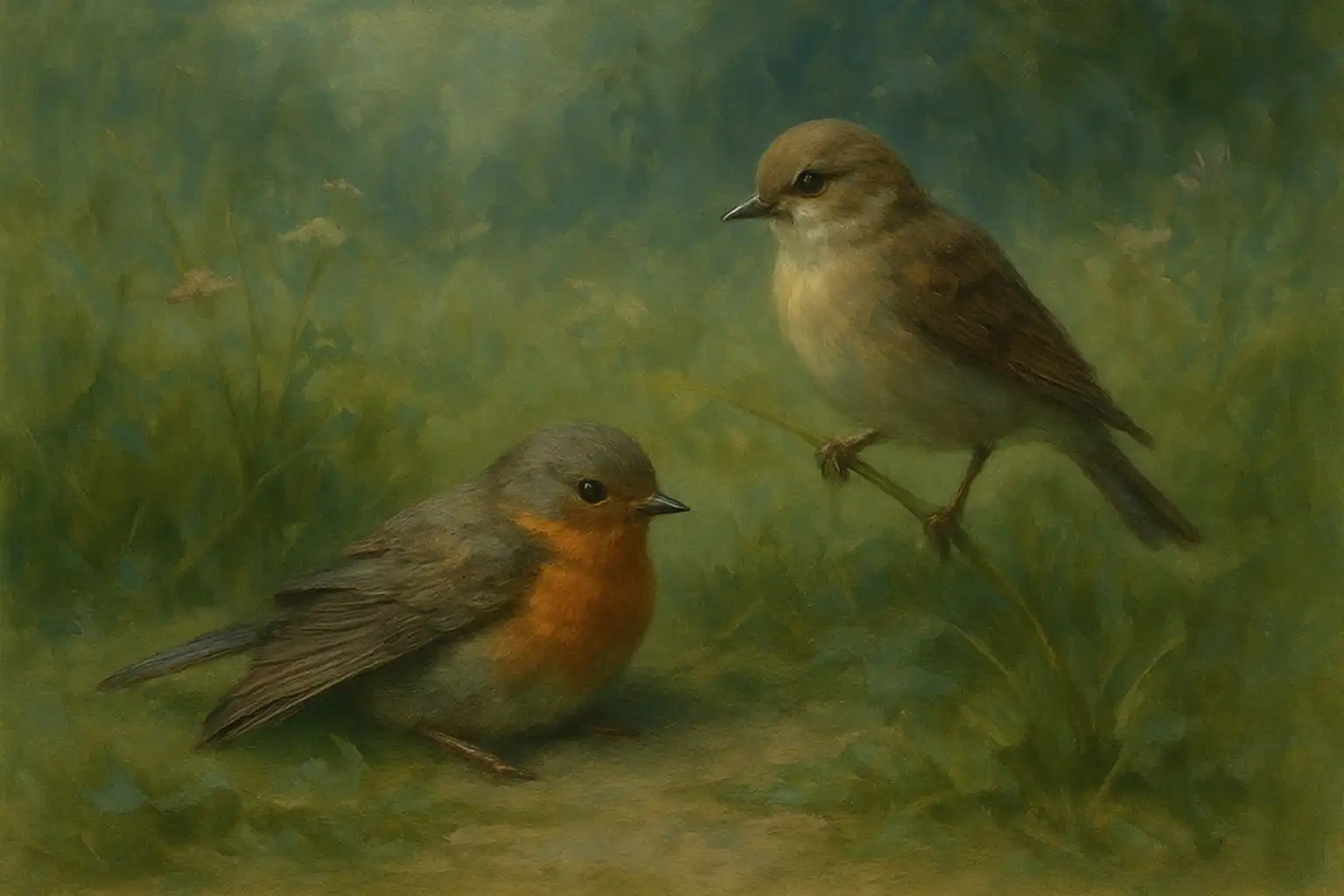
This is Dickinson at her most straightforward. Seven lines about how helping one person, or even one bird, is enough to make your life matter. No elaborate metaphors, no death imagery, no paradoxes. Just a simple statement: if I can ease one bit of suffering, I won’t have lived in vain.
What makes it work is that simplicity. Dickinson usually circles her subjects, approaches from angles, leaves things unresolved. Not here. She’s stating a philosophy directly. Help something suffering. That gives life meaning.
The robin detail expands the scope to include all vulnerable creatures, not just humans. Compassion isn’t species-specific. If you can help something fragile, you should. That counts.
The poem’s been quoted endlessly, shows up on greeting cards and inspirational posters, gets shared when people need comfort or purpose. Part of that is accessibility. You don’t need a literature degree to understand it. But the other part is that the philosophy resonates. Most people aren’t achieving fame. But most people can ease someone’s pain. Dickinson’s saying that’s enough. That’s the meaningful life.
Table of Contents:
Full Poem Text
First published in 1896 in Poems by Emily Dickinson, Third Series. This poem is in the public domain in the United States.
If I can stop one heart from breaking
by Emily Dickinson
If I can stop one heart from breaking,
I shall not live in vain;
If I can ease one life the aching,
Or cool one pain,
Or help one fainting robin
Unto his nest again,
I shall not live in vain.
Summary and Meaning
Seven lines, one sentence stretched across them. The structure is a series of conditions leading to the same conclusion. If I can do X, then Y. If I can do this or this or this, then I won’t have lived in vain.
“If I can stop one heart from breaking” is the opening condition. One heart. Not many, not all, just one. The modesty of that goal is the point. You don’t have to save the world. One person’s heartbreak prevented is enough.
“I shall not live in vain” is the payoff. Living in vain means living without purpose, wasting your existence, being here for no reason. The speaker’s saying that preventing one heartbreak is sufficient purpose. That alone justifies being alive.
“If I can ease one life the aching” restates the idea with slightly different phrasing. Easing aching, making pain less intense. “Or cool one pain” is even simpler. Cool like reducing fever, bringing relief. These are all variations on the same theme: reducing suffering.
“Or help one fainting robin / Unto his nest again” is where it gets interesting. The robin is exhausted, can’t make it home on its own. Helping it back to safety is equated with helping a person. The suffering of a small bird counts the same as human suffering in this moral framework.
“I shall not live in vain” repeats at the end. Bookending the poem with this phrase emphasizes it. The whole poem is about defining what makes life meaningful, and the answer is simple: reduce suffering where you can. Do that even once and your existence matters.
The meaning is about redefining success. Not wealth, fame, achievement, but compassion. Not grand gestures but small acts of help. The scale is deliberately modest. One heart, one pain, one robin. Dickinson’s saying that’s enough. That’s a life with purpose.
Themes and Analysis
Compassion as Life’s Purpose
The poem makes helping others the entire measure of a meaningful life. Not creating art, not building things, not achieving recognition. Just easing pain. That’s radical simplicity.
“Living in vain” is the alternative. A life focused only on yourself, where you never helped anyone. Empty, pointless. But one act of compassion flips that. One heart saved from breaking means you weren’t vain. Your existence had purpose.
That’s an accessible standard. Anyone can potentially ease one pain. You don’t need resources or power. Just the ability to see suffering and respond. Dickinson’s democratizing the idea of a meaningful life. It’s available to anyone who helps.
Modest Scale of Action
“One heart” not many. “One life” not countless. “One pain” not all pain. The singular emphasis is deliberate. Dickinson’s not asking for heroism. She’s asking for one act of kindness. That’s achievable.
The modest scale makes the philosophy livable. If she said “stop all hearts from breaking” it would sound impossible. But one? That’s doable.
The robin reinforces this. It’s not an eagle. It’s a robin, common and small, fainting and vulnerable. Helping it is a tiny act. But Dickinson places it alongside human pain as equally worthy of care.
Nature and Human Suffering Linked
The robin isn’t metaphor. It’s an actual bird needing actual help. By including it alongside human heartbreak and human pain, Dickinson’s saying compassion doesn’t stop at human boundaries. Suffering is suffering. A creature in distress deserves help regardless of species.
This reflects Dickinson’s constant attention to nature. Birds appear throughout her work, often representing vulnerability or hope. Here the bird is literally vulnerable, fainting, unable to reach safety. Helping it back to its nest is presented as morally equivalent to helping a person. That’s a broader ethic than most poetry of her era expressed.
The nest detail matters too. The robin wants to go home, wants safety. Helping it get there is restoring security, comfort. Same as easing a person’s aching or cooling their pain. It’s all about reducing distress and restoring some measure of peace.
Clarity and Directness
This is unusual Dickinson. She’s typically indirect, layered, ambiguous. This reads like a mission statement. The language is plain, the meaning is clear, there’s no hidden complexity. That directness is part of its power.
When she writes “I shall not live in vain,” you know exactly what she means. No interpretation needed. The philosophy is stated baldly. Ease suffering and your life has meaning. That’s it. The absence of her usual complexity makes the message land harder.
The poem almost feels like something she wrote for herself, a reminder of what matters. Not published in her lifetime, like most of her work. Maybe this was personal philosophy, a vow about how to live. The directness supports that reading. This is Dickinson telling herself (and us) what makes existence worthwhile.
Structure and Form
Seven lines, single stanza. No division, just one continuous thought.
No consistent rhyme scheme. Breaking/vain is slant rhyme. Aching/pain rhyme. Robin/again rhyme. The rhymes create loose cohesion without being strict. It feels conversational, natural.
Meter is loose, roughly iambic but not strict. The rhythm is speech-like rather than formally patterned. That matches the direct, plain tone.
The repetition of “I shall not live in vain” frames the poem. Opens with it and closes with it. That repetition makes it stick, feels like a vow repeated for emphasis.
The list structure (if this, or this, or this) creates accumulation. Each condition adds to the others. Stop a heart, or ease an aching, or cool a pain, or help a robin. Any of these acts is sufficient.
Capitalization is minimal. Most of Dickinson’s significant words get capitals. Here hardly anything is capitalized beyond normal grammar. That restraint matches the humble content.
Historical and Literary Context
Written early 1860s probably. Not published until 1896, ten years after Dickinson died. Appeared in Third Series edited by Todd and Higginson. They altered punctuation as usual but the core clarity remained.
The poem fits into 19th-century moral literature traditions. Sermons, hymns, religious poetry all emphasized duty to others, service, compassion. Dickinson’s participating in that tradition but compressing it. Where others wrote long poems about moral duty, she wrote seven lines.
The directness is Victorian in some ways. The era valued clear moral statements, unambiguous assertions about right living. But Dickinson’s scale is smaller than typical Victorian moralism. They often talked about duty to society, nation, God. She talks about one heart, one robin. That personal, individual focus is more modern.
The robin detail reflects her New England environment. Robins were common birds around her Amherst home. She watched them, wrote about them frequently. Including one here grounds the philosophy in observable nature rather than abstract idealism. You can actually help a bird. That’s concrete, achievable.
Within her work, this poem stands out for lacking her usual complexity. Most Dickinson poems require unpacking. This one doesn’t. That made it more popular with general readers who found her other work difficult. It’s accessible Dickinson, which is rare.
The poem also contrasts with her darker work. She wrote extensively about death, despair, doubt. This is about life, purpose, action. It’s one of her few clearly optimistic pieces, suggesting meaning is achievable through simple kindness.
Significance and Impact
It’s one of her most quoted poems, probably in her top five for recognition. The accessibility explains that. Anyone can understand and remember “If I can stop one heart from breaking, I shall not live in vain.” It’s quotable, shareable, applicable.
The philosophy resonates across contexts. People cite it in speeches, use it in memorial services, put it on sympathy cards. It offers comfort by suggesting small acts matter, that you don’t need to be extraordinary to live meaningfully. That message has universal appeal.
The poem demonstrates Dickinson could write plainly when she chose to. She’s known for difficulty and ambiguity. This proves those weren’t limitations. She could be direct. She chose complexity most of the time, but here she chose clarity. That shows range and intentionality.
The inclusion of the robin influenced nature poetry and animal ethics discussions. Placing animal suffering alongside human suffering as equally worth addressing was progressive for her era. That expansion of moral consideration beyond humans became more common later, and Dickinson’s poem is an early example.
The poem also matters for what it doesn’t do. It doesn’t explain how to achieve this purpose, doesn’t promise reward for compassion, doesn’t threaten punishment for failing. Just states the philosophy and leaves it. That restraint makes it feel more genuine than preachy moral poetry.
Famous Lines and Quotes
“If I can stop one heart from breaking, / I shall not live in vain”
The opening, the thesis, the most quoted lines. “One heart” is key. Not many, just one. That achievable goal paired with “shall not live in vain” creates a clear equation. Help one person and your life has purpose. Simple, memorable, profound.
“If I can ease one life the aching, / Or cool one pain”
Alternative ways of expressing the same idea. “Ease the aching” suggests reducing intensity without necessarily eliminating it. “Cool one pain” is almost medical, like treating fever. Both images are gentle, focused on relief rather than cure. The modesty of the language matches the modesty of the goal.
“Or help one fainting robin / Unto his nest again”
The unexpected expansion to include nature. “Fainting robin” is vulnerable, pathetic in the original sense of evoking pathos. “Unto his nest” sounds old-fashioned, almost biblical in phrasing. That elevation of helping a bird to the level of helping people is the radical move. This line is what makes the poem about more than just human compassion.
“I shall not live in vain”
Repeated at the end for emphasis. “In vain” means pointlessly, without purpose, wasted. The poem’s entire argument is that compassion, even once, prevents that waste. The repetition makes it sound like both promise and reassurance, something the speaker is telling herself as much as the reader.
Conclusion
If I can stop one Heart from breaking is Dickinson stripped of her usual complexity. No riddles, no death imagery, no ambiguity. Just a straightforward statement about what makes life meaningful: helping things that hurt. One person or one bird, doesn’t matter which. Just reduce suffering somewhere and your existence wasn’t pointless.
What makes it last is that combination of simplicity and truth. The philosophy is accessible to anyone. You don’t need special circumstances or abilities to ease one pain. And most people recognize the truth of it. We do feel like life has more purpose when we’ve helped someone. Dickinson articulates that feeling clearly, gives it language, makes it into a vow.
The poem works as comfort and as challenge. Comfort because it says small acts are enough, you don’t have to save the world to matter. Challenge because it says you do have to do something. Just existing isn’t sufficient. Living in vain is the alternative. You need to ease at least one bit of suffering. That’s a low bar but it’s still a bar.
The robin is what makes it stick though. Human compassion is expected, conventional. Adding the fainting bird expands the scope in a way that feels both surprising and right. Of course we should help vulnerable creatures. Of course their suffering counts. Dickinson stating it plainly makes it feel obvious, which is the mark of good philosophy. Take something true but unspoken and say it clearly enough that people recognize it immediately.
Frequently Asked Questions About If I can stop one Heart from breaking
What is the main message of this poem?
Life has meaning if you reduce suffering, even once. Stopping one heart from breaking, easing one pain, or helping one vulnerable creature is enough to justify your existence. You won’t have “lived in vain” if you’ve helped ease distress somewhere. The message is about redefining success as compassion rather than achievement, and making the standard achievable by keeping the scale small. One act of kindness is sufficient.
Why does Dickinson include the robin?
The “fainting robin” expands compassion beyond humans to include all vulnerable creatures. Helping a small, exhausted bird back to its nest is presented as morally equivalent to helping a person. That inclusion suggests suffering deserves response regardless of species. It also keeps the scale modest. The robin is common, small, easily overlooked. But Dickinson says helping it matters just as much as preventing human heartbreak.
What does “live in vain” mean?
Living in vain means existing without purpose, wasting your life, being here for no meaningful reason. A vain life is empty, focused only on yourself, leaving no positive impact. Dickinson’s arguing that even one act of compassion prevents that emptiness. If you’ve helped something suffering, your life had purpose. The phrase sets up the alternative to motivate action.
When was this poem published?
First published in 1896 in Poems by Emily Dickinson, Third Series, ten years after her death. Like most of her work, it wasn’t published during her lifetime. The editors Todd and Higginson altered punctuation, but the clear message remained intact. This is one of the few Dickinson poems that appeared posthumously but was immediately accessible to general readers.
How is this poem different from Dickinson’s other work?
It’s unusually direct. Most Dickinson poems are layered, ambiguous, complex. This one states its philosophy plainly without metaphor or paradox. That clarity makes it stand out in her body of work. It reads almost like a personal vow or mission statement rather than a typical poem. The absence of her usual complexity is part of what makes it powerful and widely quoted.
Why is this poem so popular?
The message is universal and accessible. Anyone can understand “stop one heart from breaking” and recognize that as a worthwhile purpose. The philosophy offers both comfort (small acts are enough) and guidance (ease suffering where you can). It’s also highly quotable, which has made it appear in speeches, sympathy cards, memorial services, and inspirational contexts. The simplicity that makes it atypical Dickinson also makes it her most widely shared poem.
What is Dickinson saying about the scale of meaningful action?
That it can and should be small. “One heart” not many. “One pain” not all pain. She’s deliberately keeping the goal modest and achievable. You don’t need to be heroic or save thousands. Just help one thing that’s suffering. That’s enough. That accessible standard means anyone can live meaningfully by this measure, regardless of circumstances or resources. The modest scale is democratizing and motivating rather than overwhelming.
Explore More Dickinson
If you enjoyed our analysis, keep exploring Dickinson’s works with the following articles: